


LiFePO4 vs Li-ion: which battery is right for home
3,000–6,000 cycles vs 500–1,000, safety, weight, cold weather and cost per cycle: an honest LiFePO4 vs Li-ion comparison for home backup power.
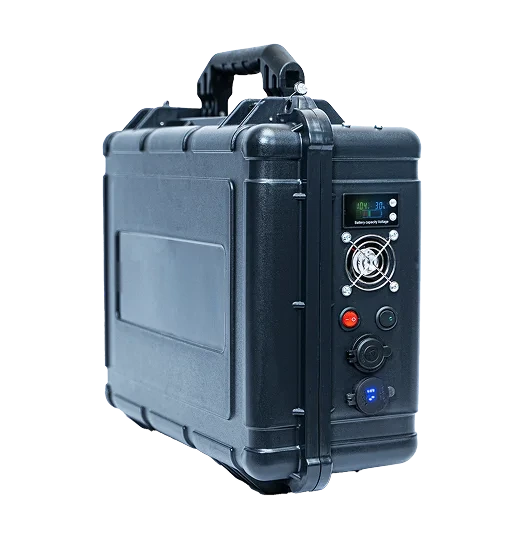
When you choose a power station or a home battery, sooner or later you meet two abbreviations: LiFePO4 (also written LFP) and Li-ion. Both are lithium, both charge fast and do not mind partial charging. But at home they behave very differently. Let's see how.
What the chemistries are
Li-ion in everyday devices usually means NMC or NCA cells: they are in laptops, phones, power banks, drones and many electric cars. Nominal cell voltage is 3.6–3.7 V, fully charged 4.2 V.
LiFePO4 (lithium iron phosphate) uses a different cathode. Nominal cell voltage is 3.2 V, with a working range of roughly 2.5–3.65 V. It stores less energy per kilogram, but the chemistry is much more stable.
Lifespan: 3,000–6,000 cycles vs 500–1,000
The key difference for a home is how many times the battery can be discharged and recharged before capacity drops to 80%.
- LiFePO4: 3,000–6,000 cycles depending on cell quality and use.
- Li-ion (NMC/NCA): typically 500–1,000 cycles.
With daily outages and one cycle a day, 3,000 cycles is more than eight years. Li-ion used the same way wears out in two to three years.
Safety and thermal runaway
Thermal runaway is when a cell overheats, starts generating heat by itself and catches fire. It can be triggered by an internal short, a hard impact, overcharging or a short circuit.
- In Li-ion, dangerous decomposition starts at a lower temperature (roughly 150–200 °C), and the breaking cathode releases oxygen that feeds the fire. Such battery fires are hard to put out.
- In LiFePO4, the cathode structure is sturdier: dangerous reactions begin at noticeably higher temperatures, far less oxygen is released, and the reaction is much calmer.
No battery is fireproof, and every one needs a proper BMS — the board that watches voltage, current and temperature. But for a flat where the battery stands next to a bedroom, LiFePO4 is the calmer choice.
Weight and energy density
Here Li-ion wins. NMC cells store roughly 150–250 Wh per kilogram, LiFePO4 about 90–160 Wh/kg. In practice a LiFePO4 battery of the same capacity is a third to a half heavier.
For an FPV drone, an e-scooter or a power bank in your pocket, weight is critical, so Li-ion makes sense there. For a station that stays at home and at most moves from room to room, a few extra kilograms are a small price for lifespan and safety.
Cold
Neither chemistry may be charged below freezing: under 0 °C metallic lithium plates on the anode, and the cell loses capacity permanently or gets damaged. A good BMS blocks charging in the cold, and some stations have built-in heating.
Discharging in the cold is allowed, but LiFePO4 loses noticeably more usable capacity below zero than Li-ion. The takeaway is simple: keep the battery in a warm room, not on a balcony or in an unheated garage.
Price per cycle
LiFePO4 is often a bit more expensive up front. The fair comparison is the cost of one cycle. Illustrative numbers:
- a 1 kWh Li-ion battery for 10,000 UAH and 800 cycles → 12.5 UAH per cycle;
- a 1 kWh LiFePO4 battery for 13,000 UAH and 3,000 cycles → 4.3 UAH per cycle.
Even at a third more up front, each LiFePO4 cycle costs about three times less. With 6,000 cycles, even less.
Voltage during discharge and storage
LiFePO4 holds an almost flat voltage until roughly 10–15% remaining, so devices run steadily to the end of discharge. The flip side: voltage alone does not tell you the exact state of charge, so rely on the BMS or station readout.
For storage, both chemistries prefer 40–60% charge and room temperature. Self-discharge is low, but check and top up the battery every few months.
Battery voltages: 12.8 / 25.6 / 51.2 V
Standard voltages are built from 3.2 V cells:
- 4 cells in series (4S) = 12.8 V — a direct replacement for a 12 V lead-acid battery;
- 8S = 25.6 V — 24 V systems;
- 16S = 51.2 V — 48 V systems used by home hybrid inverters.
Li-ion packs have different nominals: 3S is 11.1 V, 7S is 25.9 V, 13S is 48.1 V or 14S is 51.8 V. So before buying, check which battery voltage your inverter and charger expect.
What to choose for a home
- A station or battery for backup power in a flat or house — LiFePO4: long life, higher safety, stable voltage almost to the end of discharge.
- A power bank, drone or e-vehicle where every kilogram counts — Li-ion.
- A solar system with daily cycling — definitely LiFePO4: this is exactly where the lifespan difference decides everything.
To see what capacity you need, list your appliances in the autonomy calculator. Ready-made LiFePO4 stations are in the power stations section, and 12.8–51.2 V batteries for inverter systems are among the batteries.
Power at home, no generator
LiFePO4 power stations and batteries in Kyiv. Shipped by Nova Poshta once stock is confirmed.
Read next
-
How long will a fridge run on a power station?
A simple formula for fridge runtime on a power station, compressor startup surge explained, and worked examples for 1,024, 2,048 and 5,120 Wh.
-
How to build a 48 V DIY battery: S/P layout and BMS
16S layout for a 51.2 V LiFePO4 pack, capacity maths, sizing the BMS by current, top balancing, busbars, compression and testing before first use.