


How long will a fridge run on a power station?
A simple formula for fridge runtime on a power station, compressor startup surge explained, and worked examples for 1,024, 2,048 and 5,120 Wh.
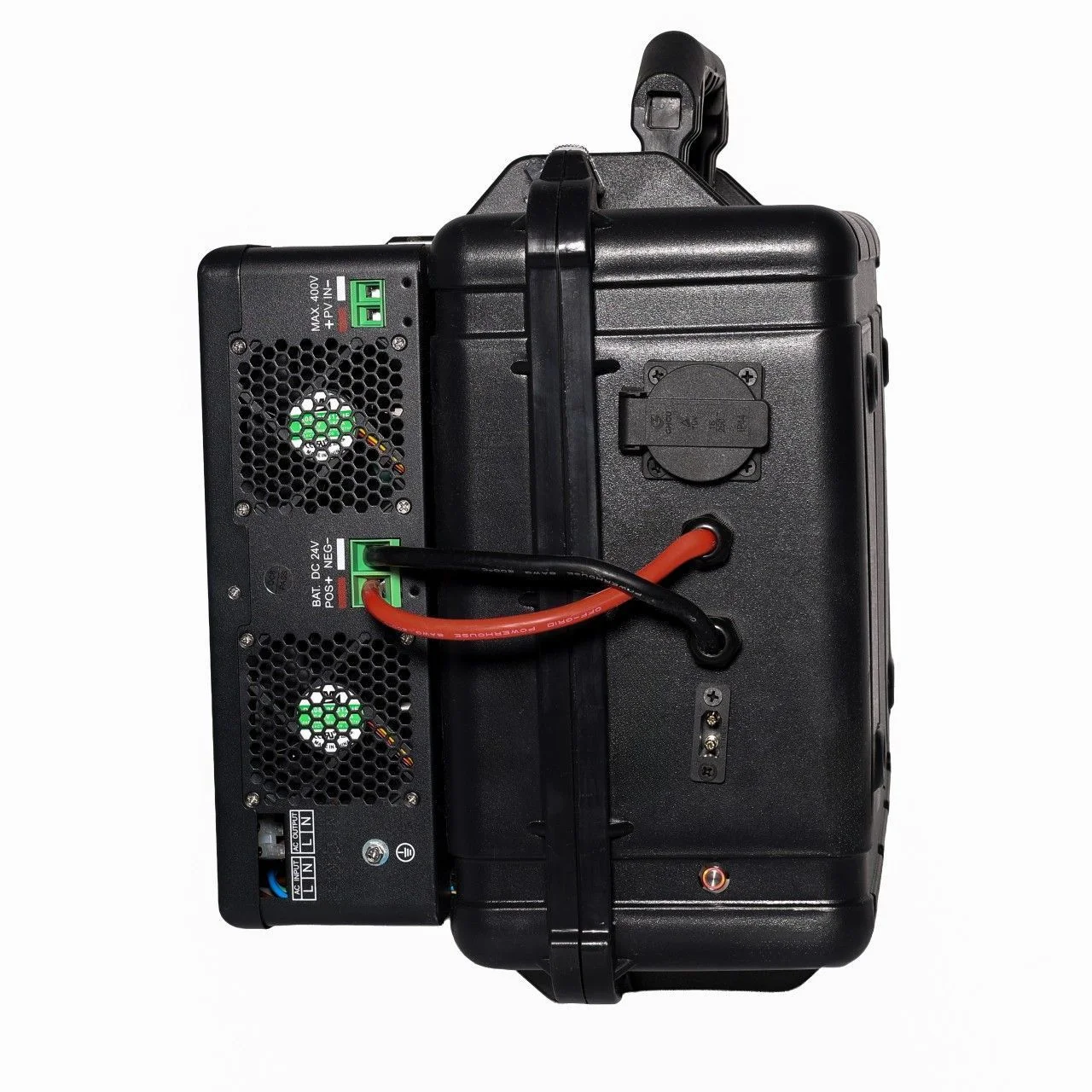
When the power goes out, the first question in almost every home is what happens to the fridge. The answer depends on three numbers: the capacity of the power station, how much the fridge uses, and how much energy is lost along the way. Below is a simple formula and ready-made calculations for 1,024, 2,048 and 5,120 Wh stations.
The formula, without heavy maths
Station capacity is given in watt-hours (Wh). The fridge will not get all of it: part of the energy turns into heat in the inverter, and the system keeps a small reserve so the battery is never drained to zero.
Runtime (h) = capacity (Wh) × inverter efficiency (~0.9) × usable depth of discharge (0.9–0.95) ÷ average power (W)
- Inverter efficiency is the share of energy that reaches the socket after converting 12/24/48 V to 230 V. For a good pure sine wave inverter, use 0.9.
- Depth of discharge (DoD) is how much of the capacity you can actually use. For LiFePO4 it is 90–95%; we use 0.9 to keep a margin.
- Average power is not the number on the compressor sticker but the average over a day. More on that below.
Together this gives a factor of 0.81: from a 1,000 Wh station the fridge gets roughly 810 Wh.
How much a fridge really uses
The compressor does not run non-stop. It switches on, cools the compartment and switches off. While running it draws 100–200 W, but only for 30–50% of the time. So the average is usually 60–100 W.
How to find a more precise number:
- Check the energy label. It shows kWh per year. Divide by 8,760 (hours in a year) and multiply by 1,000 to get average watts. For example, 300 kWh/year ≈ 34 W. In a real kitchen add 30–50%: the door gets opened, summers are hot.
- Measure it. A plug-in watt meter left for 24 hours shows the exact consumption. The station display also shows output power, but that is an instant reading, not an average.
For a calculation with a margin, use 60 W for a modern fridge and 100 W for an older or two-compartment fridge in a hot kitchen.
Startup surge: why inverter power matters
When the compressor starts, it draws 3–5 times its running power for a fraction of a second. A 150 W compressor can pull 450–750 W. If the station's inverter cannot handle that peak, the station trips its protection or the fridge does not start.
So for a fridge, look not only at capacity but also at the inverter's peak power: ideally 1,000 W peak or more, and always a pure sine wave. A modified sine wave makes the compressor hum and run hot.
Calculations for three stations
Factor 0.81 (efficiency 0.9 × DoD 0.9):
1,024 Wh → about 830 Wh usable
- 60 W fridge: ≈ 13.8 hours
- 100 W fridge: ≈ 8.3 hours
2,048 Wh → about 1,660 Wh usable
- 60 W fridge: ≈ 27.6 hours
- 100 W fridge: ≈ 16.6 hours
5,120 Wh → about 4,150 Wh usable
- 60 W fridge: ≈ 69 hours (almost three days)
- 100 W fridge: ≈ 41.5 hours
If a router (10–15 W) and a few LED lamps (10–20 W) run together with the fridge, add their watts to the average. For example, 60 + 12 + 10 = 82 W, and a 2,048 Wh station will keep all of it going for about 20 hours.
Want to calculate your own set of devices? Use the autonomy calculator: list your appliances and it shows how long a station or battery will last.
Why real runtime can be shorter
- Inverter self-consumption. A switched-on inverter uses 10–30 W by itself, even with no load. With a small load like a fridge this is noticeable: real runtime can be 10–15% below the estimate.
- Cold. If the station sits on a cold balcony, LiFePO4 delivers less energy. Keep the station indoors.
- Battery ageing. After several thousand cycles the capacity slowly drops. For LiFePO4 this is a slow process, but planning a 10–20% margin is wise.
How to stretch the fridge's runtime
- Keep the door closed. A closed fridge stays cold for about 4 hours without power; a full freezer holds for up to 48 hours, a half-full one for about a day.
- Put bottles of water in the freezer. The ice acts as a cold store and reduces compressor starts.
- Set +4…+5 °C in the fridge. Every extra degree of cold costs energy.
- Move the fridge away from the stove and radiators and leave a few centimetres of air gap behind it.
- Alternate power. During a long outage you can run the fridge from the station for 1–2 hours, then pause for 2–3 hours with the door closed. The same capacity then lasts much longer.
What to choose
For a few hours of scheduled outages, a 1–2 kWh station is enough. If the power is off for a day or longer, or you also need a boiler, a pump or a workplace, look at 5 kWh and more, and at charging the station from solar panels.
Ready-made options are in the power stations section; separate batteries for inverter systems are in batteries. Not sure what to pick? Message us and we will size the capacity for your appliances and the real length of your outages.
Power at home, no generator
LiFePO4 power stations and batteries in Kyiv. Shipped by Nova Poshta once stock is confirmed.
Read next
-
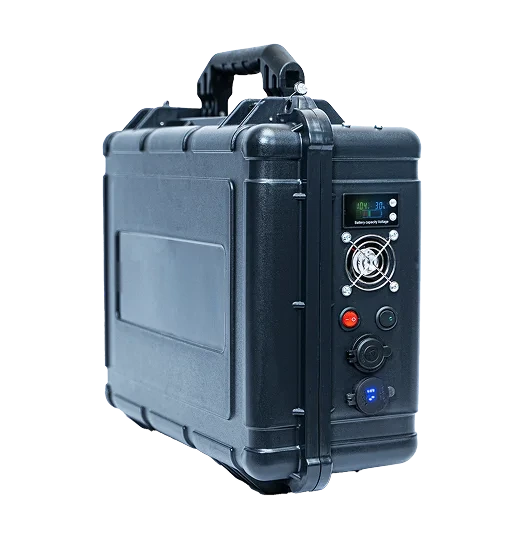
LiFePO4 vs Li-ion: which battery is right for home
3,000–6,000 cycles vs 500–1,000, safety, weight, cold weather and cost per cycle: an honest LiFePO4 vs Li-ion comparison for home backup power.
-
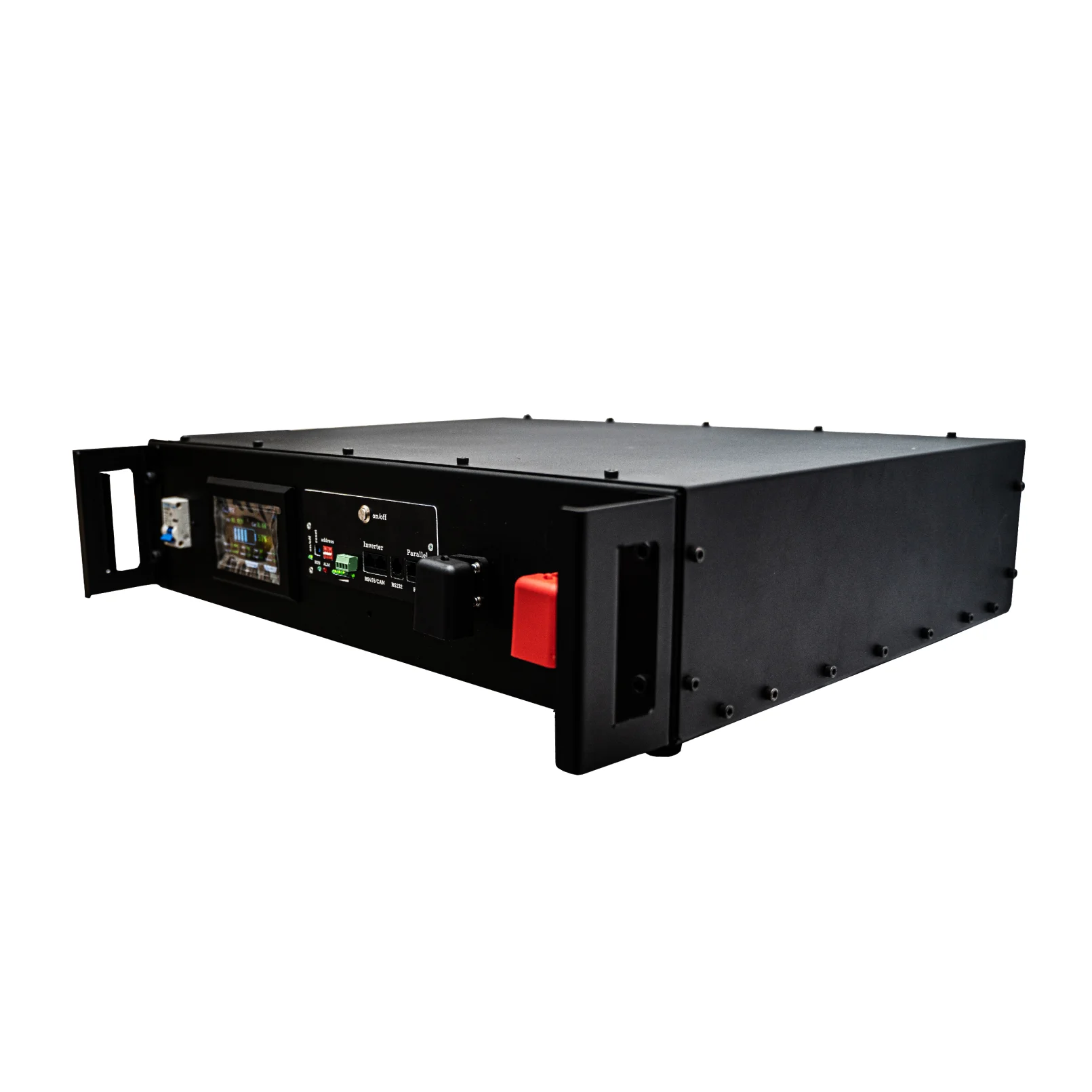
How to build a 48 V DIY battery: S/P layout and BMS
16S layout for a 51.2 V LiFePO4 pack, capacity maths, sizing the BMS by current, top balancing, busbars, compression and testing before first use.